Car audio systems use several types of speakers, each built to handle a different part of the sound. Knowing what each one does makes upgrading much easier, because you’ll know what to replace, what size to buy and when you actually need an amplifier.
Disclosure: Car Audio Nest is reader-supported. We may earn a commission when you buy through links on this page, at no extra cost to you. Learn more.
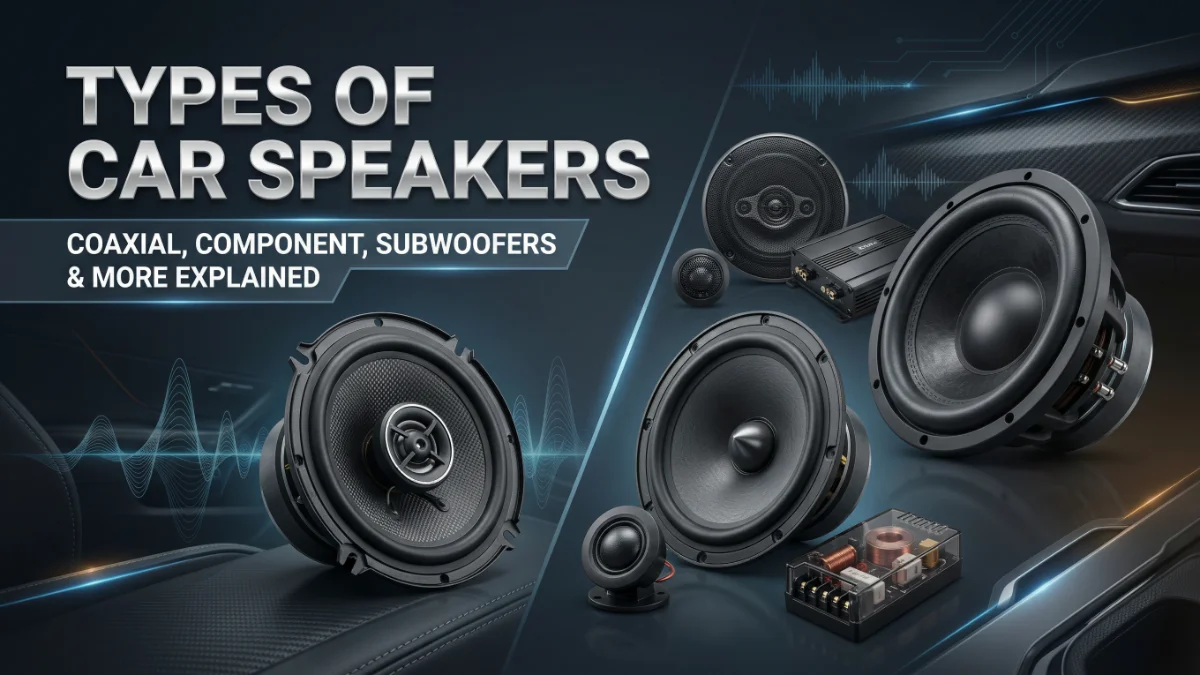
Quick answer: The main types of car speakers are coaxial (all-in-one, easiest upgrade), component (separate woofer and tweeter, best sound quality), tweeters (highs), mid-range drivers (vocals), woofers / mid-bass (lower mids and punch) and subwoofers (deep bass). Most people start by replacing factory door speakers with coaxials or components, then add a subwoofer.
Car Speaker Types at a Glance
| Type | Typical frequency range | Job | Where it goes |
|---|---|---|---|
| Coaxial (full-range) | About 50 Hz–20 kHz | Woofer + tweeter in one unit | Doors, rear deck, dash |
| Component set | About 50 Hz–20 kHz (split) | Separate woofer, tweeter and crossover | Woofer in door, tweeter high on door/dash |
| Tweeter | About 2 kHz–20 kHz | High frequencies: cymbals, detail | A-pillars, dash, door sails |
| Mid-range | About 300 Hz–5 kHz | Vocals and most instruments | Dash or doors in 3-way systems |
| Woofer / mid-bass | About 50 Hz–2 kHz | Lower mids and punchy kick drum | Doors |
| Subwoofer | About 20 Hz–100 Hz | Deep bass you feel | Trunk, under or behind seats |
Frequency ranges are typical and overlap. Crossovers decide where each speaker starts and stops. For how the parts inside a speaker work, see parts of a speaker.
1. Coaxial Speakers
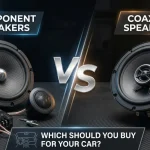
Coaxial speakers mount a tweeter in front of (or inside) the woofer cone, so one speaker covers the full range. They drop straight into factory locations, which makes them the easiest and most affordable upgrade. Most work well on head-unit power, though they sound better with an amplifier. Two-way, three-way and even five-way designs exist. More “ways” doesn’t automatically mean better sound.
Learn more in our coaxial car speakers guide, or see tested picks for the best 6×9 speakers. Popular coaxial lines include the Kicker CS series and Pioneer A-Series.
2. Component Speakers
A component set separates the woofer and tweeter and adds an external crossover that sends each driver only the frequencies it handles best. Mounting the tweeter higher, closer to ear level, creates a wider, more realistic soundstage. Components cost more and take longer to install, but they’re the choice for the best sound quality. Popular lines include the Rockford Fosgate Punch and JL Audio C2 component sets.
3. Tweeters
Tweeters reproduce high frequencies: cymbals, string detail and the “air” around vocals. Silk and other soft-dome tweeters sound smooth. Metal domes (aluminum, titanium) sound brighter and more detailed. Tweeter placement matters more than almost anything else for imaging, so aim them toward the listening position.
4. Mid-Range Drivers
Mid-range drivers handle the frequencies where vocals and most instruments live. They appear in three-way component systems and some factory premium systems. Read more in what is a mid-range driver.
5. Woofers and Mid-Bass Drivers
The woofer in a door speaker (usually 6.5″ or 6×9″) produces mid-bass punch and lower mids. A good mid-bass driver in a sealed, damped door makes kick drums hit harder and takes strain off the subwoofer.
6. Subwoofers
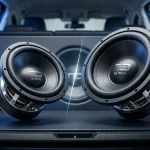
Subwoofers handle the lowest octaves that door speakers can’t reproduce. They need an enclosure and an amplifier, or you can choose a powered subwoofer with both built in. Sizes typically range from 8″ to 15″. See our best subwoofer for car picks, 12 vs 15 subwoofers, and the subwoofer box guide.
Common Car Speaker Sizes
| Size | Common locations |
|---|---|
| 3.5″ | Dash, small door or pillar positions |
| 4″ and 4×6″ | Dash and rear doors in older and smaller cars |
| 5.25″ | Doors in compact cars |
| 6.5″ / 6.75″ | Front doors in most cars |
| 6×8″ (5×7″) | Doors in many Ford and Mazda models |
| 6×9″ | Rear deck and front doors in many sedans and trucks |
Sizes vary by make, model and trim, so always confirm with a fit guide before buying. Not sure how many speakers your car has? See how many speakers are in my car.
Which Speakers Should You Upgrade First?
- Front door speakers: they shape most of what you hear. Coaxials for a simple upgrade, components for the best sound.
- Add a subwoofer: it fills in the low end and lets the door speakers play cleaner.
- Add an amplifier: it gives aftermarket speakers the clean power they need. See best car amplifiers.
- Rear speakers last: they mainly provide fill for rear passengers.
Budgeting the upgrade? See how much it costs to replace car speakers.
Frequently Asked Questions
What are the main types of car speakers?
Coaxial (full-range) speakers, component speaker sets, tweeters, mid-range drivers, woofers or mid-bass drivers, and subwoofers.
Which type of car speaker sounds best?
Component speakers usually sound best because the separate tweeter can be placed for better imaging and the crossover splits frequencies more precisely. Coaxials are easier to install and cost less.
Do I need an amplifier for aftermarket speakers?
Not always. Many efficient coaxial speakers sound better than factory speakers on head-unit power. Component sets and subwoofers benefit much more from an amplifier.
What is a full-range car speaker?
A full-range speaker covers most of the audible spectrum on its own, usually a coaxial with a built-in tweeter. It’s the most common factory and replacement speaker type.