Component and coaxial speakers are the two ways to replace your car’s door speakers. Coaxials are the simple, all-in-one upgrade. Components split the woofer and tweeter for better sound but take more work to install. Here’s how they compare and which one suits your car, budget and ears.
Disclosure: Car Audio Nest is reader-supported. We may earn a commission when you buy through links on this page, at no extra cost to you. Learn more.
Quick answer: Choose coaxial speakers for an affordable, drop-in upgrade that works on factory or head-unit power. Choose component speakers if sound quality and a realistic soundstage matter most and you’re willing to mount separate tweeters and add an amplifier.
Component vs Coaxial at a Glance
| Factor | Coaxial | Component |
|---|---|---|
| Design | Tweeter mounted on the woofer | Separate woofer, tweeter and crossover |
| Sound quality | Good, a big step up from factory | Best: clearer highs, better imaging |
| Soundstage | Sound comes from the door, low down | Raised tweeters put the “stage” on the dash |
| Installation | Easy drop-in, about 20–60 min per door | Harder: tweeter mounting and crossover wiring |
| Power | Often fine on head-unit power | Best with an amplifier |
| Typical price (pair) | About $40–$200 | About $100–$500+ |
| Best for | Daily drivers, budget upgrades, rear speakers | Front stage, sound-quality builds |
How Coaxial Speakers Work
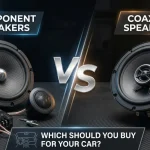
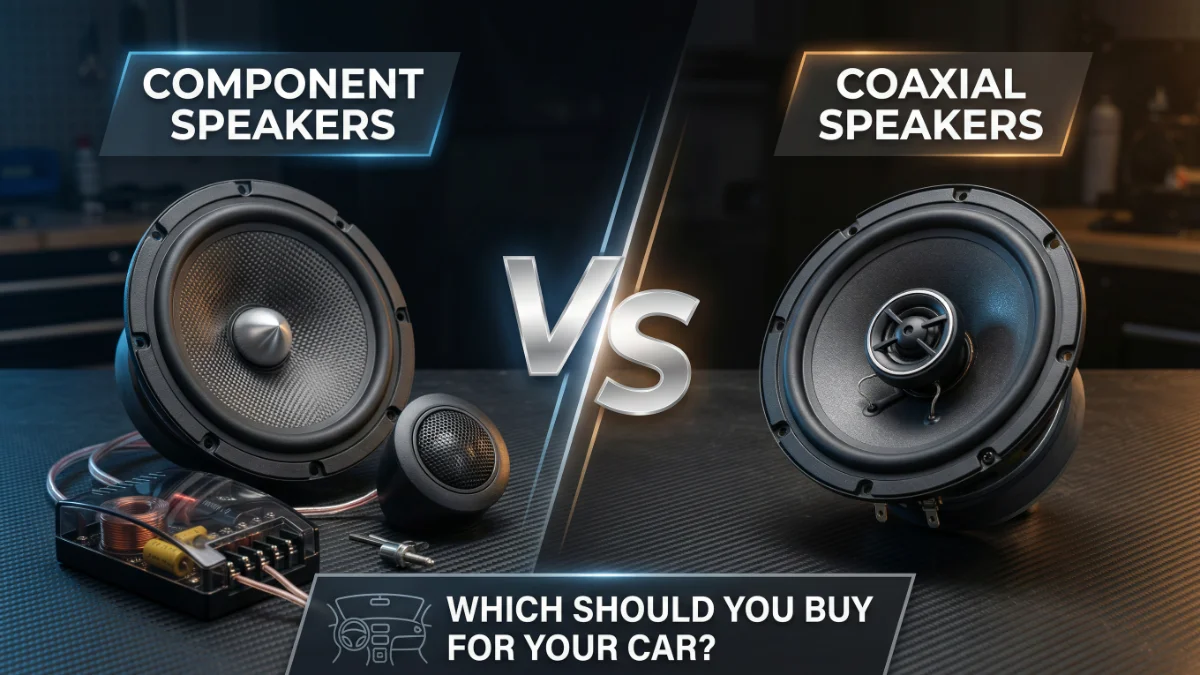
A coaxial speaker has a woofer for lows and mids, with a tweeter mounted on a post or bridge in front of it. A simple built-in crossover, often just a capacitor, keeps bass out of the tweeter. Because everything is in one unit, coaxials fit factory locations with little or no modification. Our coaxial car speakers guide covers 2-way vs 3-way designs.
How Component Speakers Work
A component set includes a woofer, a separate tweeter and an external passive crossover. The crossover splits the signal more precisely and often lets you adjust tweeter level. Because the tweeter can sit higher (on the door sail, A-pillar or dash), sound appears to come from in front of you rather than from your knees. That’s the “soundstage” component owners talk about.
Sound Quality: Is the Difference Worth It?
In the front of the car, yes, for most listeners who care about clarity. Components usually deliver cleaner vocals, sharper stereo imaging and less harshness at volume. In the rear doors, where speakers mostly provide fill, a good coaxial is all you need. A common, cost-effective setup is components in the front and coaxials in the rear.
Installation Differences
- Coaxial: remove the door panel, unscrew the old speaker, fit an adapter bracket if needed, plug in with a speaker harness and refit.
- Component: do the same for the woofer, then mount the tweeter (surface, angled or flush) and find a dry spot inside the door or kick panel for the crossover. Wiring runs from the amp or head unit to the crossover, then out to each driver.
Paying for installation? See how much it costs to replace car speakers. Component installs usually take longer, so expect higher labor.
Do You Need an Amplifier?
Efficient coaxials (around 90 dB sensitivity or more) sound good on head-unit power. Components typically have lower sensitivity and higher power handling, so an amplifier makes a much bigger difference with them. A 4-channel amp delivering roughly 50–100 W RMS per channel suits most sets. See our best car amplifiers picks.
Popular Options to Compare
| Type | Product line | Why people buy it |
|---|---|---|
| Coaxial | Kicker CS series | Loud, efficient, great on factory power |
| Coaxial | Infinity Kappa | High sensitivity with detailed sound |
| Component | Rockford Fosgate Punch | Strong mid-bass, handles amplifier power well |
| Component | JL Audio C2 | Smooth, balanced sound-quality set |
Shopping for 6x9s? See our tested best 6×9 speakers. For an overview of every speaker type, read types of car speakers.
Frequently Asked Questions
Are component speakers better than coaxial?
For sound quality, usually yes. Separate tweeters and better crossovers give clearer highs and a more realistic soundstage. Coaxials win on price and ease of installation.
Can I use component speakers without an amp?
You can, and they’ll still beat most factory speakers, but components usually need more power to sound their best. An amplifier unlocks their full clarity and volume.
Should I put components in the rear doors?
Usually not. Rear speakers provide fill, so coaxials are the better value there. Put components in the front, where they shape the soundstage.
Can I mix component and coaxial speakers?
Yes. Components up front and coaxials in the rear is one of the most common and cost-effective setups. Use the fader to keep the front stage dominant.