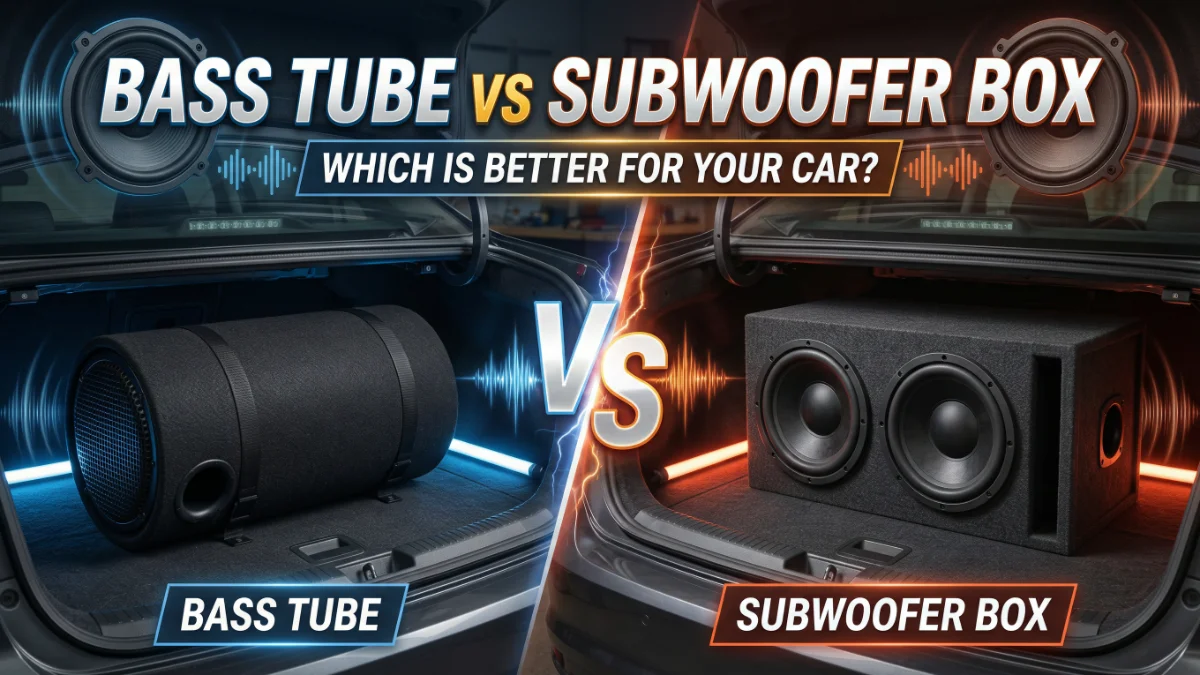
A bass tube is simply a subwoofer mounted in a cylindrical enclosure instead of a rectangular box. That shape makes it compact, easy to install and affordable, but it gives up some output compared with a well-designed box. Here’s how they compare and which makes sense for your car.
Disclosure: Car Audio Nest is reader-supported. We may earn a commission when you buy through links on this page, at no extra cost to you. Learn more.
Quick answer: A bass tube is best for an easy, budget bass boost in a small trunk or hatch, especially a powered tube with a built-in amp. A subwoofer in a properly sized box is louder, deeper and more controlled, and it’s the better choice if you want real low-end impact.
Bass Tube vs Subwoofer Box at a Glance
| Factor | Bass tube | Subwoofer box |
|---|---|---|
| Enclosure | Cylinder (sealed or ported), small internal volume | Rectangular sealed, ported or bandpass, sized to the driver |
| Bass output | Moderate: fills in the low end | High: louder and deeper |
| Sound | Punchy, but limited deep extension | Fuller, more controlled low bass |
| Space | Small footprint; can roll into a corner | Takes more trunk space |
| Installation | Very easy, especially powered tubes | Needs a matched amp, wiring and box choice |
| Typical cost | Low to moderate | Moderate to high (sub + box + amp) |
| Best for | Small cars, factory systems, renters, budget | Anyone who wants real bass impact |
What Is a Bass Tube?
A bass tube puts a subwoofer, typically 8″ or 10″, in a round tube. Many are “powered”, meaning the amplifier is built in, so you just connect power, ground, remote turn-on and an audio signal (often speaker-level inputs from a factory stereo). The round shape is strong and cheap to build, and it fits neatly into a trunk corner. The trade-off is limited internal volume, which restricts how deep and loud the bass can go. Brands such as Bazooka popularized the format.
Why a Subwoofer Box Usually Sounds Better
A subwoofer’s bass response depends heavily on the enclosure volume and design. A box built to the driver’s recommended volume (sealed for tight, accurate bass, ported for more output) lets the sub play deeper and louder with less strain. You can also choose larger drivers (10″–15″) and more amplifier power. Learn more in our subwoofer box guide.
When a Bass Tube Is the Right Choice
- You want more bass than factory speakers give, without a full system build.
- Trunk space is precious and the tube needs to be removable.
- You’re keeping the factory stereo and want simple speaker-level hookup.
- Budget is tight and convenience matters more than maximum output.
When a Subwoofer Box Is Worth It
- You listen to hip-hop, EDM or bass-heavy music and want to feel it.
- You have room for a box and are happy to add a matched amplifier.
- You want deep, clean bass at higher volumes.
Short on space but want a real sub? Look at shallow mount subwoofers or compare 8 vs 10 inch subwoofers. Ready to buy? See our best subwoofer for car picks and match the power with what size amp you need for your sub.
Frequently Asked Questions
Is a bass tube as good as a subwoofer?
A bass tube is a subwoofer, just in a small cylindrical enclosure. It adds noticeable bass but usually can’t match the depth and output of a similar sub in a properly sized box.
Do bass tubes need an amp?
Passive bass tubes do. Powered bass tubes have the amplifier built in, so you only need to wire power, ground, remote turn-on and an audio input.
Can I use a bass tube with a factory stereo?
Yes. Most powered bass tubes accept speaker-level inputs, so they connect to factory speaker wires without a preamp output.
Where should I place a bass tube in my car?
Start in a rear trunk corner with the driver facing back or toward the corner. Corner loading often boosts bass. Try a couple of positions and keep the one that sounds fullest.